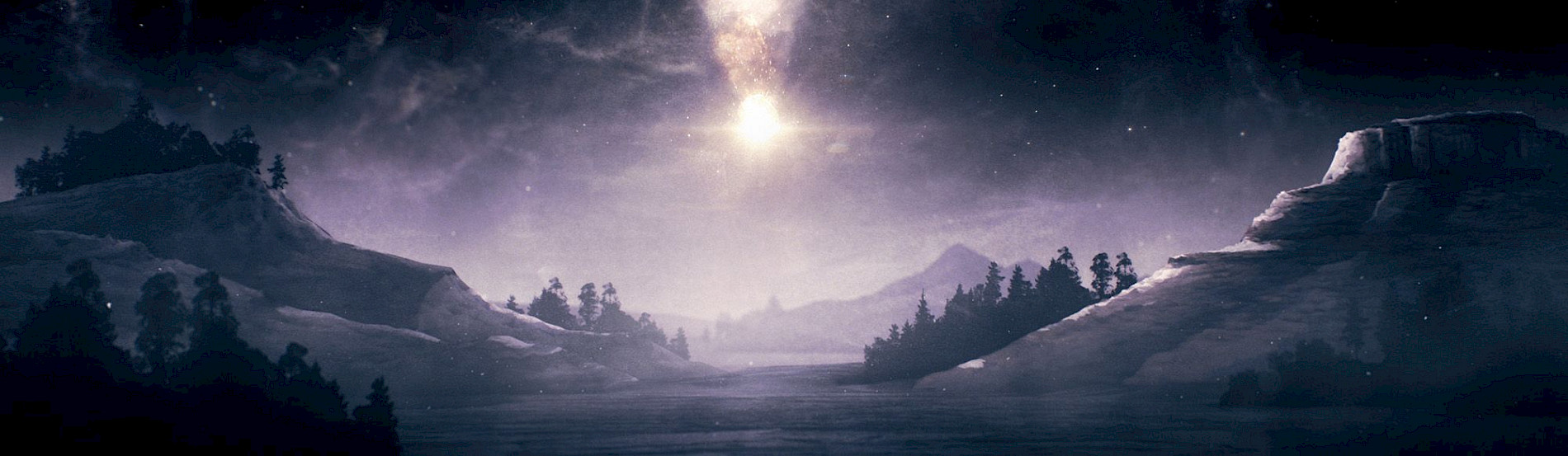
One spring day, long, long ago, a mysterious celestial body appeared in the sky. It is an asteroid heading towards Earth. The speed at which this unexpected visitor is approaching is colossal: 12 km/s – 43,000 kilometres per hour. Measuring up to 17 kilometres in diameter, this cosmic boulder is twice the size of Copenhagen, and a catastrophe beyond our worst nightmares seems inevitable.
A spring day in hell
The Impact
Upon its sudden encounter with Earth’s atmosphere, the enormous asteroid heats up violently and is transformed into a gigantic fireball. When the fireball strikes, energy equivalent to 100 billion atomic bombs – or humanity’s total energy consumption over more than 1,000 years – is released in a split second. The asteroid strikes the Gulf of Mexico. Upon impact, the top 30 kilometres of the Earth’s crust melt instantly – that is three times the depth of the deepest oceans or four times the height of Mount Everest. And like a stone dropped into a bucket of water, the now-molten crust rises up into a 15-kilometre-high column of glowing, molten rock. The column collapses immediately, forming a crater 200 kilometres in diameter. Colossal quantities of seawater pour into and down into the crater.
Ejection of material
The violent energy release caused by the impact causes enormous quantities of crushed, molten and vaporised material – from both the impact site and the asteroid itself – to be ejected from the crater. As days, weeks and months pass, this material will disperse throughout the atmosphere across the entire globe.
Precipitation
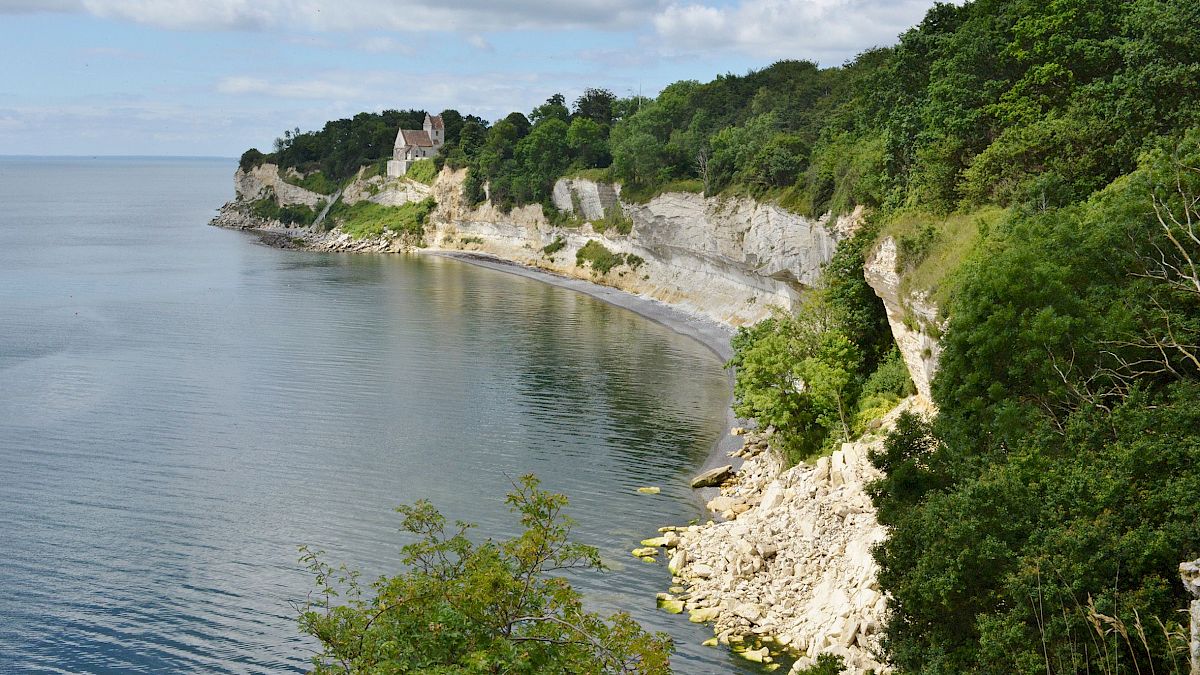
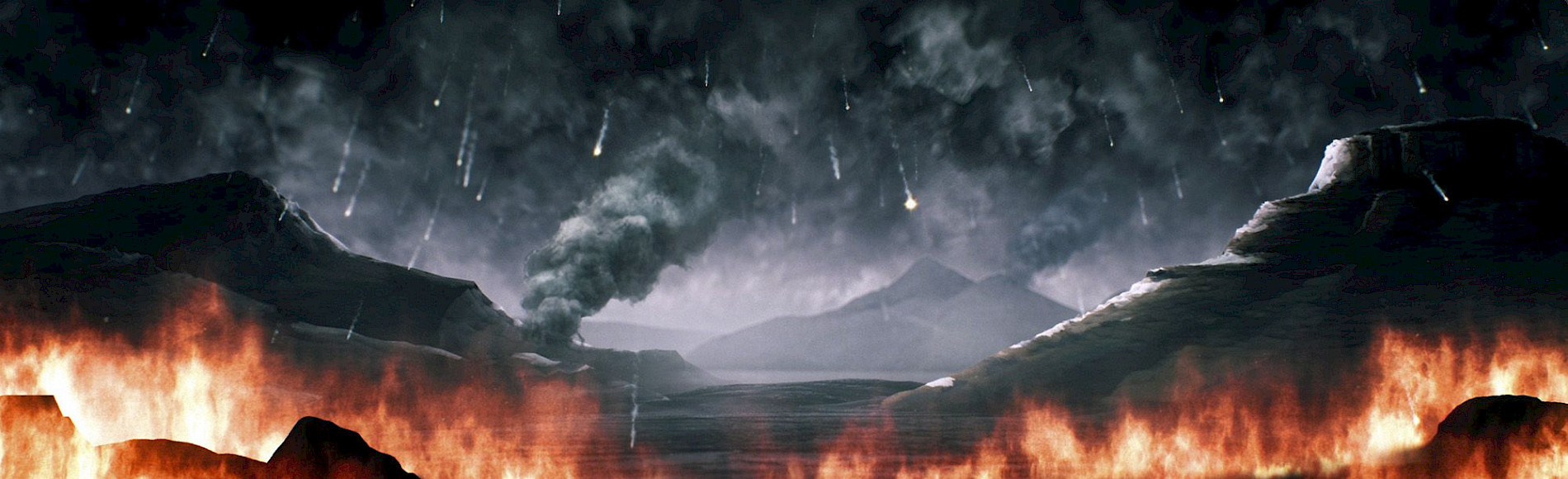
Minutes and hours after the impact, the first ejected material returns as fallout. Billions upon billions of microtektites – tiny, glowing particles of molten material from the impact site – rain down upon the planet like beautiful but deadly shooting stars. The red-hot particles heat the atmosphere, and vegetation catches fire all over the globe. The world is ablaze, whilst the now-cooled particles settle to rest on the planet’s surface. Microscopic particles containing material from the asteroid itself also fall to Earth – and these microtektites, containing the rare element iridium, can be found today in 66-million-year-old boundary layers all over the Earth. Not least in Fiskeleret at Stevns Klint.
Darkness and cold
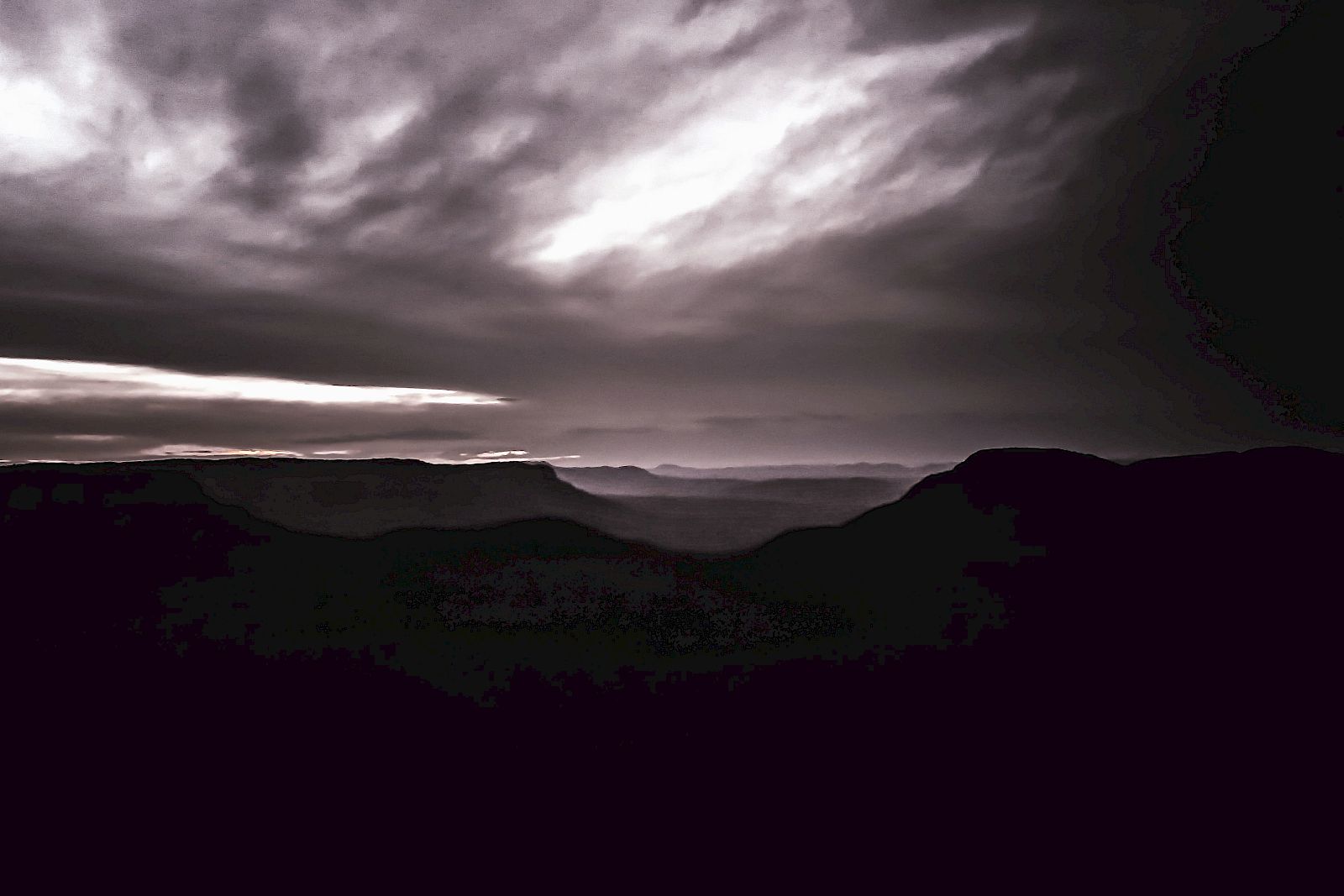
The organisms that manage to survive the first terrible seconds, minutes, hours and days still have the worst to come. Enormous quantities of microscopic particles and dust grains from the impact have become suspended in the atmosphere and soon darken the sky all over the globe. The darkness is intensified by dust and smoke from the global forest fires ignited by the glowing fallout. In the first few months following the impact, the Earth lies in total darkness. No light. Pitch-black darkness. The absence of light causes the temperature to drop dramatically, and a worldwide, ice-age-like condition sets in.
Without light, there is no life
The Sun plays a vital role in life on Earth. Plants and algae depend on the energy in the Sun’s rays for photosynthesis, and these green photoautotrophic organisms form the first vital links in all food chains – both in water and on land – and are thus the foundation of all ecosystems on Earth. A dramatic (and inevitable) domino effect sets in: plants die, herbivores die, predators die. Food chains and food webs break down. Ecosystems collapse.
And to make matters worse: the impact releases enormous quantities of sulphur dioxide from the subsurface. The sharply increased levels of sulphur dioxide in the atmosphere cause the planet to cool further – whilst also resulting in the formation of toxic acid rain.
More than half of all species on Earth become extinct as a direct or indirect consequence of the asteroid impact. The fifth mass extinction in the history of life is a reality.
A new, warm world
As the atmosphere finally begins to clear and the light returns, the catastrophe plays one last diabolical trump card: upon impact, in addition to the toxic sulphur dioxide, large quantities of carbon dioxide and methane were released into the atmosphere. For millions of years, these greenhouse gases had been securely trapped in the calcareous subsoil, but the impact suddenly released them from the geological strata. The consequence of this sudden, sharp increase in the concentration of greenhouse gases is global warming, and over the coming hundreds to thousands of years, life must, as best it can, try to adapt to this new, warmer world.